Today March 7, 2026, 07:07 PM
Today March 7, 2026, 07:07 PM
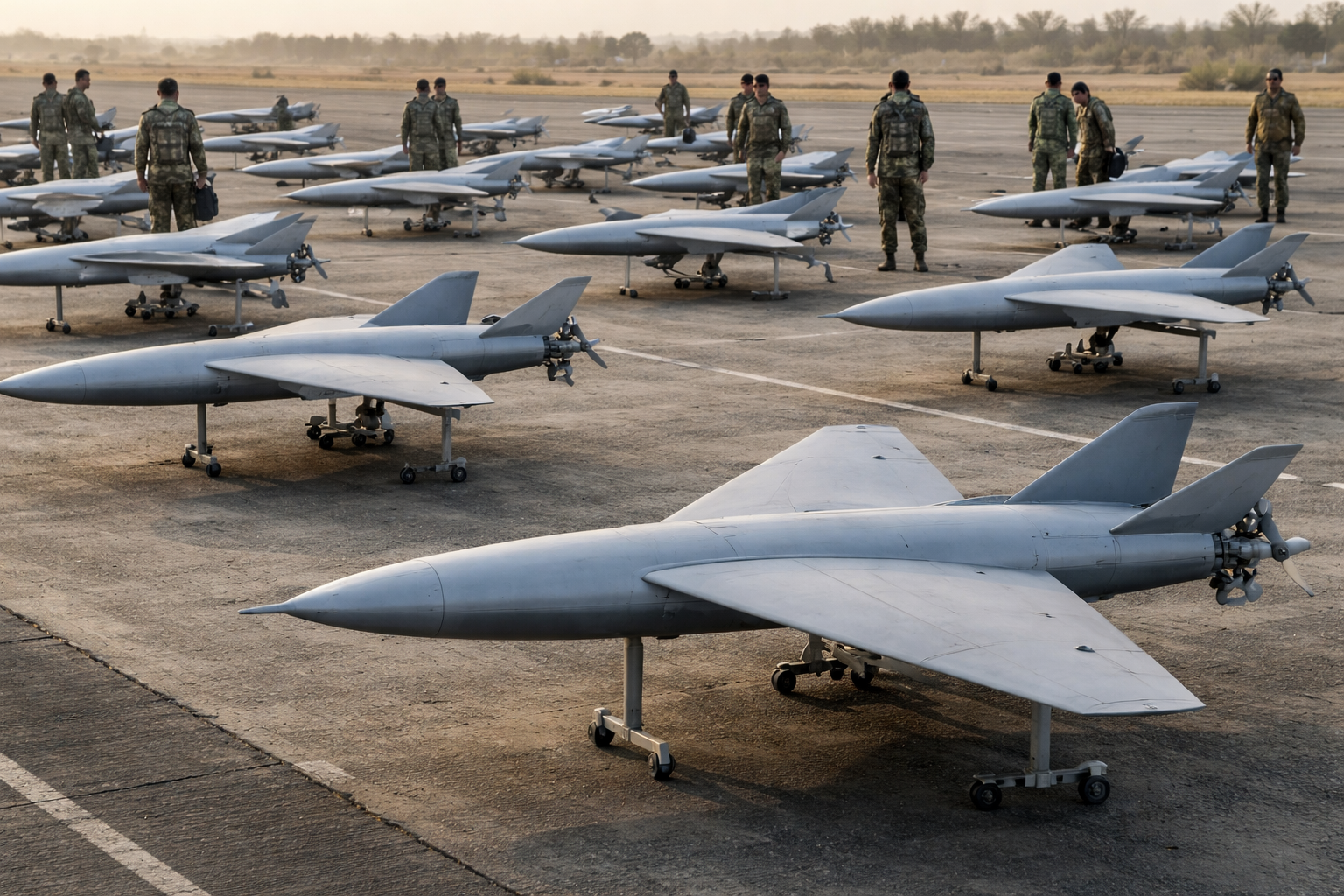
Iran’s growing fleet of Shahed-136 loitering munitions is drawing increasing attention from Western military analysts and intelligence officials, who say the relatively inexpensive drones could pose a significant asymmetric threat to advanced militaries including the United States.
The Shahed-136, widely described by defense experts as a “kamikaze drone,” is designed to loiter in the air before striking a target with an explosive payload. According to multiple reports from international defense analysts and Western intelligence assessments cited by major media outlets, the drone’s key advantage lies in its low production cost, long range, and ability to be deployed in large numbers.
Military analysts say Iran has focused heavily on drone technology over the past decade, building a diverse arsenal of unmanned systems intended to offset the technological superiority of countries such as the United States and Israel. The Shahed-136 has become one of the most widely discussed platforms in that strategy.
The drone gained global attention during the Russia-Ukraine war, where Ukraine and Western governments have accused Russia of deploying Iranian-designed Shahed-136 drones in strikes on infrastructure. Tehran has repeatedly said its cooperation with Russia is limited and denies supplying weapons specifically for use in the war, though Western governments continue to investigate the transfers.
Defense experts say the main concern is the drone’s potential use in swarm tactics, where dozens or even hundreds of drones are launched simultaneously to overwhelm air defense systems. Such tactics could complicate the response of advanced missile defense networks.
According to defense analysts cited by Western media and think tanks, systems like the Shahed-136 are particularly difficult to counter because their low altitude flight paths and relatively small radar signature can make detection and interception more challenging.
U.S. defense officials have also warned that Iran continues to expand its unmanned aerial vehicle capabilities, which Washington believes are being shared with allied groups across the Middle East. Iran, however, maintains that its military technology is developed for defensive purposes.
Security experts note that while the Shahed-136 does not match the technological sophistication of Western precision weapons, its low cost and mass-deployment potential make it a strategic tool in modern asymmetric warfare.
As global tensions remain high in several regions, analysts say the evolution of drone warfare, including systems like the Shahed-136, is likely to play an increasingly important role in future conflicts.

Iranian Foreign Minister Abbas Araghchi Joins Massive March in Tehran to Mark International Quds Day

170 Children Killed After Strike Hits School in Iran, Tehran Accuses United States of Responsibility