Today January 15, 2026, 06:49 PM
Today January 15, 2026, 06:49 PM
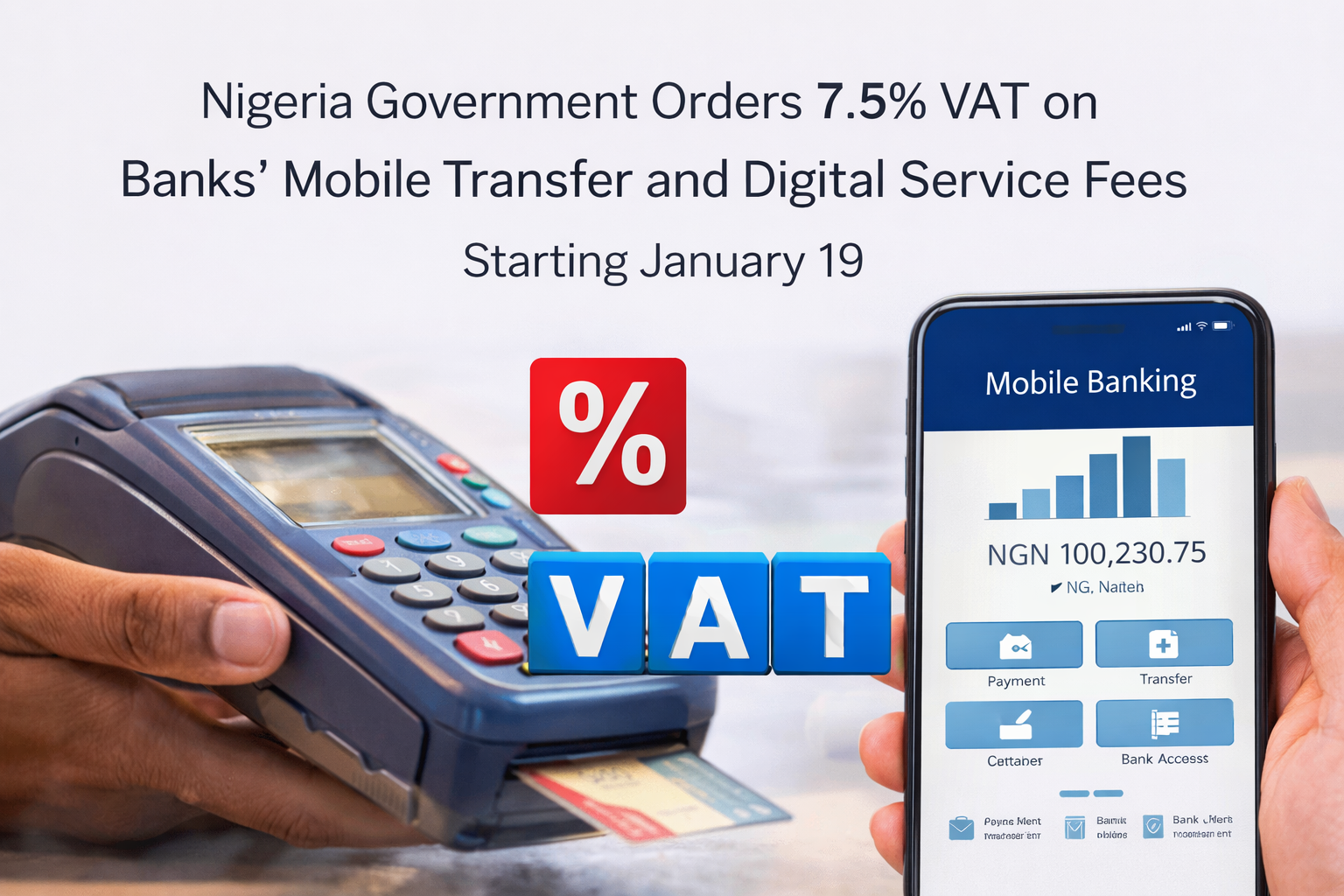
The event is upcoming as the Federal Government of Nigeria has directed banks and financial technology firms to begin charging and remitting a 7.5 % value-added tax (VAT) on selected electronic banking service fees from January 19, 2026. This directive has driven the topic to trend globally, with widespread public attention on how everyday financial transactions will change.
Government notices communicated to customers through email from payment platforms include details of the new application of VAT on mobile money transfers, USSD transaction fees, and card issuance charges. The tax is mandated to be collected on the service fees themselves, not on the principal amount being transferred or held in accounts.
According to the guidance, the 7.5 % VAT must be remitted directly to the Nigerian Revenue Service (NRS) by commercial banks, microfinance banks, and electronic money operators. Notices from fintech firms, such as Moniepoint, indicated that compliance with the tax collection requirement begins on the effective date set by the NRS.
Under the policy, financial institutions are expected to display the VAT as a separate line item on transaction statements so customers can see exactly what portion of the charge is tax. Some services remain exempt from VAT, including interest earned on savings and deposit accounts.
This measure forms part of the government’s broader tax strategy to capture revenue from Nigeria’s rapidly growing digital financial services sector, where electronic banking and fintech platforms have seen exponential use. As the implementation date approaches, more banks and fintech platforms are issuing notifications to prepare customers for the updated fee structure.
At this stage, the full impact on consumer transaction costs and overall digital payment behavior remains to be observed after January 19, when the VAT regime goes into effect.
Sources
• Vanguard News
• TheStar
• TheCable