Today January 9, 2026, 12:47 PM
Today January 9, 2026, 12:47 PM
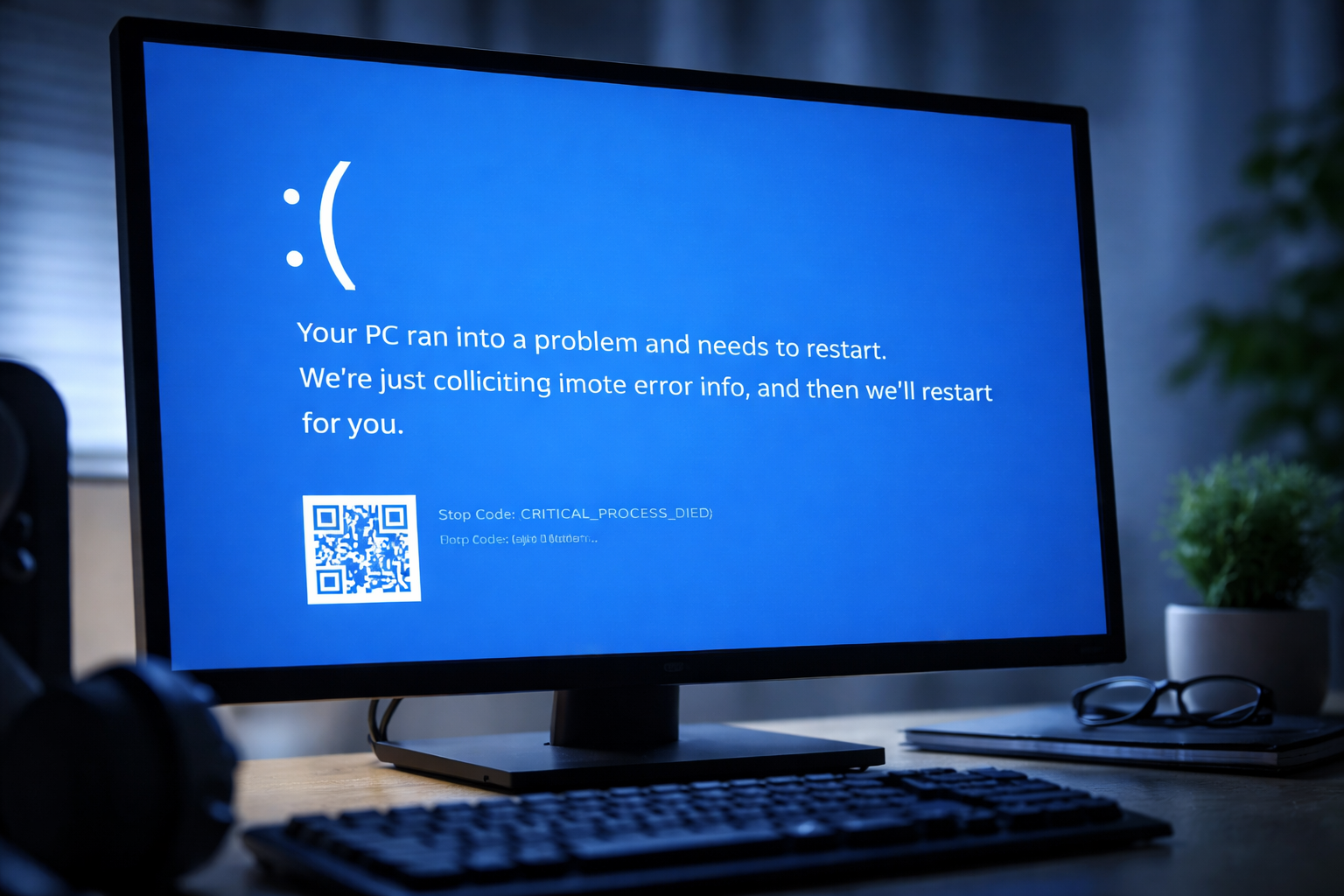
The “Blue Screen of Death,” commonly referred to as the écran bleu de la mort, is an ongoing issue experienced by users of Microsoft Windows operating systems worldwide. This screen appears when the system encounters a critical error from which it cannot safely recover, forcing an automatic shutdown or restart to prevent data corruption.
An écran bleu is typically triggered by hardware failures, incompatible drivers, corrupted system files, or serious software conflicts. When the error occurs, Windows displays a blue screen with diagnostic information, including an error code, intended to help identify the cause of the failure. These errors can occur during startup, software installation, system updates, or regular use.
Microsoft has confirmed that blue screen errors are designed as a protective mechanism. By stopping the system immediately, Windows limits potential damage to hardware and stored data. Modern versions of Windows have simplified the display, but the underlying function remains the same: alerting users to a non-recoverable system fault.
Technology experts advise users experiencing repeated écran bleu errors to check for recent hardware changes, ensure all drivers and operating system updates are properly installed, and review system error logs. In many cases, built-in Windows diagnostic and recovery tools can assist in identifying and resolving the issue.
As Windows continues to receive updates, Microsoft maintains ongoing documentation and support resources to help users understand and troubleshoot blue screen errors. Users are encouraged to rely on official guidance when addressing recurring system crashes.