Today January 11, 2026, 09:58 AM
Today January 11, 2026, 09:58 AM
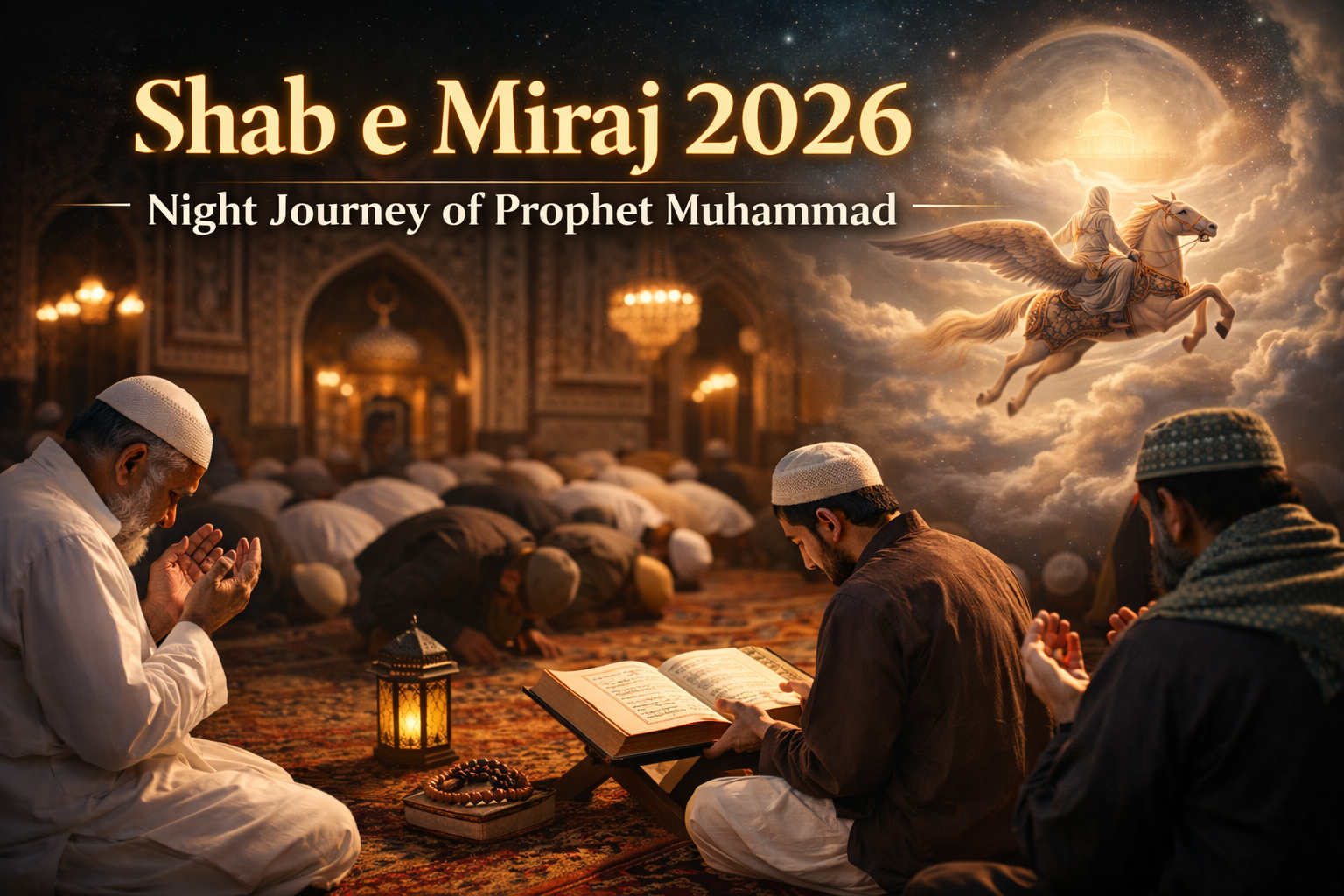
The observance of Shab e Miraj 2026 has been officially listed as an upcoming Islamic religious event, with Muslim communities around the world preparing to mark the sacred night in accordance with established religious teachings. Shab e Miraj commemorates the miraculous Night Journey of the Prophet Muhammad, known in Islamic tradition as Al Isra wal Miraj. The final date of observance will be confirmed following official moon sighting announcements by recognized religious authorities.
According to Islamic calendar calculations, Shab e Miraj 2026 is expected to be observed on the night of January 16, beginning after sunset and continuing until dawn on January 17, subject to moon sighting confirmation. Religious councils have advised worshippers to await official announcements before finalizing observance plans, as lunar sightings may vary slightly by region.
Shab e Miraj marks two major events described in Islamic tradition. The first is Al Isra, the night journey in which the Prophet Muhammad traveled from Masjid al-Haram in Makkah to Masjid al-Aqsa in Jerusalem. The second event is Al Miraj, during which the Prophet ascended through the heavens by divine command. Islamic scholars have confirmed that this journey holds a central place in Islamic belief and is referenced in the Quran and Hadith literature.
During the Miraj, the obligation of the five daily prayers was established, making the event significant not only historically but also in daily Islamic practice. Religious authorities emphasize that while details of the journey are discussed in classical texts, believers are encouraged to focus on the spiritual lessons rather than speculative descriptions.
The significance of Shab e Miraj lies in its emphasis on faith, obedience, and spiritual elevation. Scholars explain that the night serves as a reminder of the importance of prayer, patience, and trust in divine guidance. Islamic institutions consistently note that Shab e Miraj is a moment for reflection rather than ritual innovation.
Across different regions, the night is observed through quiet worship, remembrance, and learning. No mandatory public rituals are prescribed, and observance practices may vary while remaining within accepted Islamic principles.
Islamic scholars agree that there are no obligatory acts of worship exclusively prescribed for Shab e Miraj. However, believers are encouraged to engage in general acts of devotion that are already well-established in Islamic teachings.
Performing additional prayers during the night is widely practiced. There is no fixed number of rakats for Shab e Miraj prayers. Worshippers may pray individually, focusing on sincerity and humility.
Reciting and reflecting on Quranic verses is encouraged. Scholars advise prioritizing understanding and reflection over quantity.
Offering personal supplications is common during the night. Worshippers seek forgiveness, guidance, and strength in faith. There is no exclusive dua required for Shab e Miraj.
Engaging in remembrance through phrases of glorification and praise aligns with the spirit of the night. Religious authorities recommend maintaining a calm and private approach.
Scholars emphasize that Shab e Miraj is an opportunity for self-assessment and recommitment to ethical conduct.
Many Muslims observe voluntary fasting on the day following Shab e Miraj. Scholars have clarified that fasting on this day is not obligatory and is linked to general encouragement for voluntary fasting rather than a specific command tied to the event. Believers may choose to fast as a personal act of devotion.
Religious authorities have advised caution regarding practices that are presented as compulsory without strong scholarly consensus. Scholars consistently remind worshippers to avoid labeling any specific ritual as mandatory for Shab e Miraj and to follow guidance issued by trusted religious institutions.
As of now, Shab e Miraj 2026 remains an upcoming observance, with the final date subject to official moon sighting confirmation. Religious councils are expected to issue formal announcements closer to the event.
What is Shab e Miraj in Islam?
Shab e Miraj commemorates the Night Journey of the Prophet Muhammad, including Al Isra and Al Miraj.
When is Shab e Miraj 2026 expected?
It is expected on the night of January 16, subject to moon sighting confirmation.
Are there specific Shab e Miraj prayers?
No fixed prayers are prescribed. Voluntary prayers may be performed.
Is fasting on Shab e Miraj obligatory?
No. Fasting is voluntary and not mandatory.
How should Shab e Miraj be observed?
Through prayer, remembrance, reflection, and learning, within established Islamic teachings.